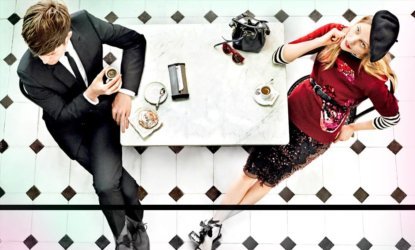
Fashion carries a mantra of unpredictability. What’s popular today will not be popular tomorrow. What’s outdated may become trendy in the next few years.
Despite its ever-evolving nature, there are factors that influence how people see current look and deem it “fashionable” or not. Glossy magazines have become the leading influence of defining fashion in the media.
High fashion, the origin of exclusive and trend-setting clothing, has always been associated with aristocracy and the elites. However, not all things that are now considered high fashion are originally made for the privileged. In fact, some of the most popular trend in high fashion today used to be an identity of the lowly and exploited groups in ancient history.
Read on.
1. HIGH HEELS
A classic woman’s footwear, high heels are a “must” for women who want to have longer and slender legs. High heels are a symbol of femininity a.ka. “girl power”. They also help create an aura of sophistication and professionalism. However, ancient Egyptian murals dating to as early as 3500 B.C. have depicted men wearing high heels, including the butchers who have to walk above the blood of dead animals. Ancient Rome has also stereotyped women wearing high heels as prostitutes, since the shoes were used to identify those who were involved in the illegal sex trade.
Now, creators of expensive high heels are sprouting like mushrooms left and right: Jimmy Choo, Christian Louboutin, Manolo Blahnik, Miu Miu, Chanel, Louis Vuitton, Gucci, Dolce and Gabbana, and so on and so forth. If you want to know the hottest high heels in the fashion world today, check it out on the pages of Vogue, on the gossip sites about Hollywood, and on the streets of upper New York.
2. JEANS
A wardrobe staple, jeans has become a very popular casual dress today, with top brands like Levi Strauss and Wrangler leading the parade. Blue Jeans has specifically been identified as part of the American culture especially of the Wild West. Long before becoming part of everyday life, jeans was but a humble denim trouser worn by sailors on the ships’ rugged working environment in the 19th century. Jeans was also used by some correctional facilities as uniform of inmates.
Because of its established durability and low-maintenance, jeans has become a symbol of toughness and adventure. Youth later popularized it as a statement of rebellion, if not casualness. Today, haute couture has developed the most expensive jeans, popularly called designer jeans. Adorned with lavish embellishments like rhinestones and diamonds, the most expensive designer jeans to date has been sold by Secret Circus for a whopping $1.3 million.
This form of theatrical makeup that creates a stereotyped caricature of a Black person has been around since the 19th century, primarily gaining prominence from minstrel shows and vaudeville. However, it’s offensive and racism culture was brought to a halt in the 1960′s after the US Civil Rights Movement was established.
Five decades later, blackface found its way into high fashion. Fashion bible Vogue has been one of the many glossy magazines who resurrected the art using top models like Lara Stone. Despite that some photographers and fashion experts have asserted that contemporary blackface is simply a form of art, it cannot be denied that painting White models in black paint for high fashion shoots is potentially offensive to Black people. For one, if fashion magazines really want to portray Black people in a good light, they can simply tap Black models to do the shoots.
4. HOOP EARRINGS A.K.A. “SLAVE EARRINGS”
Vogue Italy has been
recently bombarded with criticisms for calling hoop earrings as “slave earrings” and tracing its origin from the Black women who were brought to USA during the slave trade era. Ironic as it is, the fashion magazine labeled this accessory as “slave earrings” but wants the contemporary world to see it as a symbol of freedom. Quoting the magazine’s take on hoop earrings, it says:
“If the name brings to the mind the decorative traditions of the women of colour who were brought to the southern United States during the slave trade, the latest interpretation is pure freedom.”
Unfortunately, people (especially African Americans) are not buying this kind of logic. Who would want to reminisce slavery and human torture, and call it fashionable?
The clueless Italian Vogue attempted to mend the damage by replacing the label “slave earrings” to “ethnic earrings”. But the words “slave” and “ethnic” cannot be used interchangeably, unless you need a lecture on racism. In order to not make things worst, Vogue Italy has decided to remove the entire article. Sometimes, it’s also tough being a fashion bible.